Butter to Weed Ratio: Why Cannabutter Is the Foundation
Cannabutter is the backbone of cannabis cooking. Once you have a batch of properly infused butter, you can use it in virtually any recipe that calls for regular butter: brownies, cookies, pasta, toast, sauces, or anything else. Master this one technique and you unlock hundreds of recipes.
The process is straightforward: decarboxylate your cannabis, simmer it in butter to extract the THC into the fat, strain out the plant material, and refrigerate. The details matter though, and getting them right is the difference between potent, clean-tasting butter and a grassy, unpredictable mess.
What You’ll Need
- Cannabis flower (amount depends on desired potency, see dosing section below)
- Unsalted butter (1 cup / 2 sticks per batch is standard)
- 1 cup water (prevents scorching)
- Baking sheet + parchment paper (for decarb)
- Saucepan or slow cooker
- Cheesecloth or fine mesh strainer
- Kitchen thermometer (highly recommended for temperature control)
- Glass container for storage
Best Butter for Cannabutter
Not all butter works equally well. The key factor is fat content - THC is fat-soluble, so higher fat means better extraction.
- Unsalted butter (80% fat) - The standard choice. Widely available, good flavor, reliable results. Use this if you are following any recipe for the first time.
- European-style butter (82-86% fat) - Brands like Kerrygold, Plugra, or Vital Farms have higher fat content and lower water content, which means slightly better THC extraction and richer flavor in your final product.
- Clarified butter / ghee (99% fat) - The highest extraction efficiency since it is nearly pure fat. Ghee also has a higher smoke point, making it more forgiving during infusion. The trade-off is that it behaves differently in baking recipes that rely on the water content in regular butter.
For most home bakers, standard unsalted butter works perfectly. If you want to maximize potency, European-style butter is the best upgrade for minimal extra cost.
Step 1: Calculate Your Butter to Weed Ratio
Before you start, figure out how much flower you need. The formula:
Grams needed = (Target mg per serving x Number of servings) / (THC% / 100 x 1000 x 0.88 x 0.60)
Understanding the Formula
The two decimal factors account for real-world losses that reduce the amount of THC that ends up in your butter:
-
0.88 (decarboxylation efficiency): Raw cannabis contains THCA, which is not psychoactive. Heating it converts THCA into active THC, but the conversion is never 100%. At 240 degrees F for 40 minutes, approximately 88% of the THCA converts to THC. The remaining 12% is lost to incomplete conversion and minor degradation from heat.
-
0.60 (infusion extraction efficiency): When you simmer decarbed cannabis in butter, the fat absorbs the THC from the plant material. In practice, about 60% of the available THC transfers into the butter. The rest stays trapped in the plant matter that you strain out. This number can vary slightly based on infusion time, temperature, and fat content of the butter, but 60% is a reliable average for home kitchen conditions.
Worked Example
If you want 10mg per serving across 12 brownies using 20% THC flower:
(10 x 12) / (0.20 x 1000 x 0.88 x 0.60) = 120 / 105.6 = 1.14 grams
If you track your strains in DankLog, the Recipe Wizard does this calculation automatically using the exact THC percentage from your stash.
Cannabutter Potency Reference Table
This table shows common flower-to-butter ratios and the approximate THC yield, assuming 20% THC flower with standard decarb and infusion efficiency:
| Butter | Flower | Approx Total THC | Per Tablespoon (1/16 cup) |
|---|---|---|---|
| 1 cup | 3.5g (1/8 oz) | ~370mg | ~23mg |
| 1 cup | 7g (1/4 oz) | ~740mg | ~46mg |
| 1 cup | 14g (1/2 oz) | ~1,480mg | ~92mg |
These are based on starting flower weight. The formula factors (0.88 and 0.60) already account for decarb and extraction losses. If your flower is a different THC percentage, scale proportionally: 25% flower yields about 25% more THC than 20% flower at the same weight.
Skip the math. DankLog’s Recipe Wizard calculates your exact cannabutter dosing automatically. Select a strain from your stash, set your target mg per serving, and it handles the ratio math using your flower’s actual THC percentage - not estimates. See how it works →
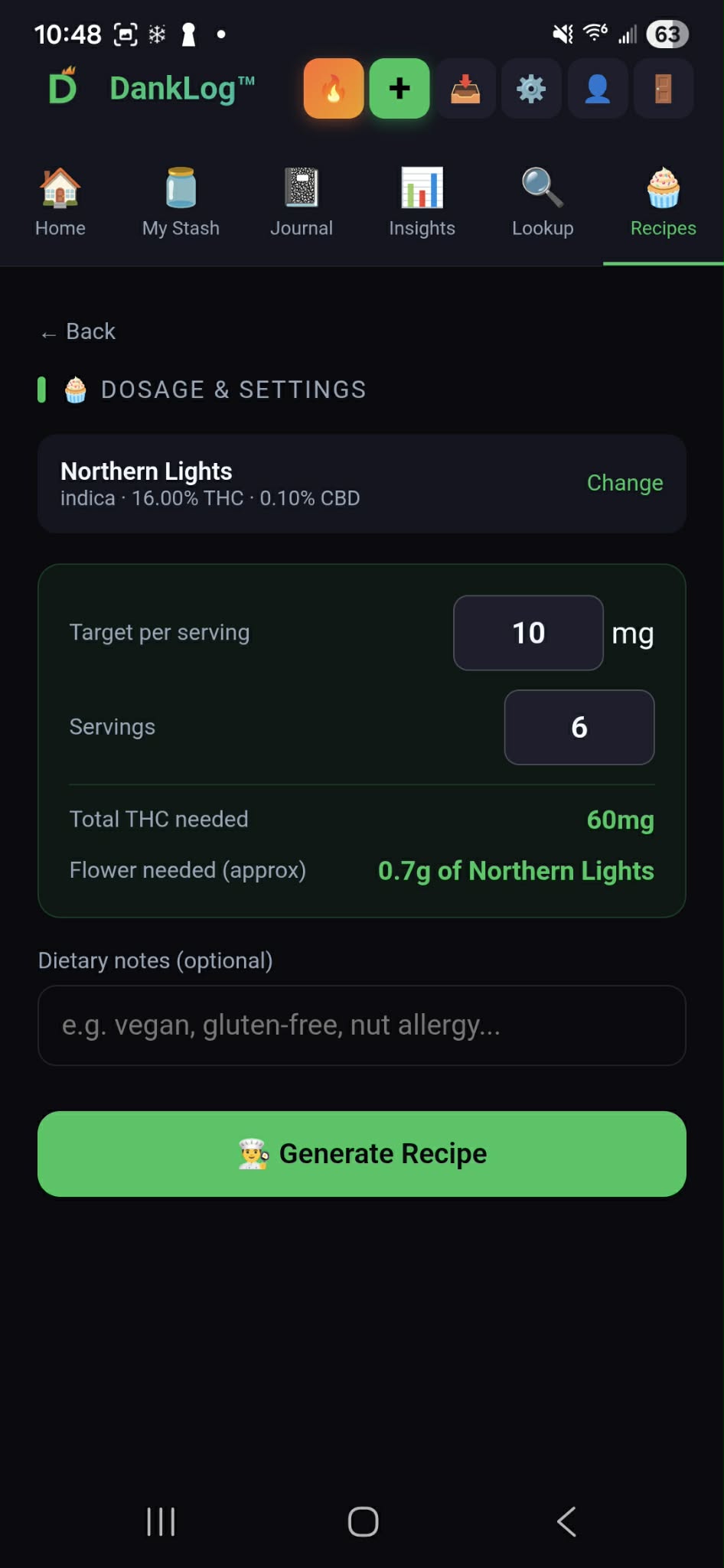
A quarter ounce per cup of butter is a good starting point for most home bakers. It produces butter that is potent enough to be effective in standard recipes without being overwhelmingly strong.
Step 2: Decarboxylation
This step activates the THC. Raw cannabis contains THCA, which is not psychoactive on its own. Heat converts THCA into THC through a process called decarboxylation (removing a carboxyl group from the molecule). Skip this step and your butter will have little to no psychoactive effect, regardless of how much flower you use.
- Preheat oven to 240 degrees F (115 degrees C)
- Break flower into pea-sized pieces (don’t grind fine)
- Spread in a single layer on parchment-lined baking sheet
- Bake for 40 minutes
- Remove and let cool for 10 minutes
Your flower should look slightly darker and smell toasted. About 88% of the THCA will have converted to active THC.
Temperature and Timing Guide
Getting the temperature right at each stage is the single most important factor in making good cannabutter. Here is a breakdown of the critical temperature windows.
Decarboxylation Temperatures
- 240 degrees F for 40 minutes (standard): Converts approximately 88% of THCA to THC. This is the most widely tested and reliable method for home use.
- 220 degrees F for 45 minutes (terpene-preserving): Slightly lower conversion rate (around 80-85%), but preserves more of the terpenes that contribute to flavor and the entourage effect. Use this if taste matters more than maximum potency. See our terpene cooking guide for flavor pairing tips.
- Above 300 degrees F: THC begins degrading rapidly. Avoid this range entirely during decarb.
Infusion Temperatures
- 160-180 degrees F (70-82 degrees C): The ideal infusion range. THC dissolves efficiently into fat at these temperatures without degrading.
- Below 150 degrees F: Extraction slows significantly. You would need much longer infusion times.
- Above 200 degrees F: THC degradation accelerates. If your mixture is simmering aggressively or boiling, it is too hot.
Cooking with Cannabutter
- Below 320 degrees F: Safe zone. THC remains stable at normal baking temperatures for the duration of most recipes.
- 320-350 degrees F: THC begins to degrade, but short exposure (under 30 minutes) is generally acceptable. Most baked goods fall in this range and turn out fine because the internal temperature of the food stays lower than the oven temperature.
- Above 350 degrees F: Significant potency loss. If a recipe calls for high heat, consider adding cannabutter after cooking instead (for example, melting it over finished dishes).
A kitchen thermometer is one of the best investments you can make for consistent results. Without one, you are estimating every critical temperature in the process.
Step 3: The Infusion
Stovetop Method (2-3 hours)
- Melt butter in a saucepan on low heat
- Add 1 cup water (this regulates temperature and prevents burning)
- Add decarbed cannabis and stir gently
- Maintain low simmer at 160-180 degrees F (70-82 degrees C). Never let it boil
- Stir every 20-30 minutes for 2-3 hours
- The mixture should gently bubble, not roll
Slow Cooker Method (4-6 hours, more hands-off)
- Set slow cooker to Low
- Add butter, water, and decarbed cannabis
- Cover and let infuse for 4-6 hours
- Stir occasionally
- Temperature should stay around 160-180 degrees F
The slow cooker method is more forgiving since it holds temperature consistently, but takes longer. For first-timers, the slow cooker is often the better choice because it reduces the risk of accidentally overheating the mixture.
Step 4: Strain and Store
- Set a cheesecloth-lined strainer over a glass bowl or jar
- Pour the mixture through slowly
- Squeeze the cheesecloth gently to extract remaining butter (don’t wring it hard, that pushes chlorophyll through and makes it taste grassy)
- Refrigerate for at least 2 hours or overnight
- The butter will solidify on top, and the water will separate below
- Lift the solidified butter off the water and pat dry
- Discard the water
Your cannabutter should be greenish-yellow. A darker green color means more plant material got through, which affects taste but not potency.
For even cleaner results, strain a second time through a coffee filter after the cheesecloth. This removes fine particles that contribute to grassy taste, though it takes longer since the butter drains slowly through the paper.
Storage
- Refrigerator: Lasts 2-3 weeks in an airtight container
- Freezer: Lasts 6+ months. Portion into ice cube trays for easy measured use
- Always label with strain name, date, and estimated potency per tablespoon
Portioning into tablespoon-sized blocks before freezing makes dosing far easier when you cook later. Each block is a known quantity that you can pull out and use without thawing the entire batch.
Dosing Your Cannabutter
If you used 1.14g of 20% THC flower in 1 cup (16 tablespoons) of butter, your total yield is roughly 120mg THC across the batch:
120mg / 16 tablespoons = 7.5mg per tablespoon
Now you can dose any recipe precisely. A brownie recipe calling for 1/2 cup butter (8 tablespoons) would contain 60mg total, divided across however many pieces you cut.
If you are new to edibles, start with a target of 5mg per serving and work up from there. Edibles take 45 minutes to 2 hours to take full effect, and the experience lasts significantly longer than smoking. Going slow is always the right call.
Cannabutter vs Cannabis Coconut Oil
Butter is the traditional choice for cannabis infusion, but coconut oil is an equally valid option with some distinct advantages. Both use the same decarboxylation and infusion process.
Fat Content and Extraction
Coconut oil has a slightly higher fat content (about 82%) compared to butter (about 80%). Since THC is fat-soluble, coconut oil can theoretically extract a small amount more THC per volume. In practice, the difference is marginal and unlikely to be noticeable in your final product.
When to Use Coconut Oil
- Vegan recipes: The obvious choice when butter is not an option.
- Capsules: Coconut oil solidifies at room temperature and works well for filling gel capsules for precise, tasteless dosing.
- Topicals: If you are making cannabis-infused balms or salves, coconut oil is the standard carrier.
- Longer shelf life: Coconut oil resists rancidity longer than butter, lasting up to 2 months refrigerated.
- Neutral flavor: Works better in recipes where butter flavor would be out of place.
When to Use Butter
- Baking: Butter produces better texture and flavor in cookies, cakes, and pastries. The water content in butter creates steam during baking, which contributes to flakiness and rise.
- Savory cooking: Butter sauces, garlic bread, pasta, and mashed potatoes all benefit from the richness that only butter provides.
- Toast: Cannabutter on warm toast is one of the simplest and most effective edible delivery methods.
One Key Difference in Process
When infusing coconut oil, you do not need the water separation step. Butter contains milk solids and water that can burn, which is why you add extra water during infusion and then separate it later. Coconut oil is pure fat, so you can infuse directly without water. Simply strain out the plant material and store.
Common Mistakes
Not Decarbing at All
This is the most fundamental error. Raw cannabis contains THCA, which is not psychoactive. Without the heat of decarboxylation to convert it to THC, your butter will not produce the effects you expect. Even if you simmer the cannabis in butter for hours, the infusion temperature (160-180 degrees F) is too low for efficient decarboxylation. The oven step is not optional.
Temperature Too High
THC degrades above 320 degrees F and starts to evaporate. If your butter is boiling rapidly, you’re destroying potency. Low and slow is the key.
Grinding Too Fine
Powdering your cannabis in a grinder pushes more chlorophyll and plant waxes into your butter, giving it a harsh, grassy taste. Break it up by hand into small chunks.
Not Using Water
The water acts as a temperature buffer and absorbs water-soluble compounds like chlorophyll that you don’t want in your final product. Always add water.
Squeezing the Cheesecloth Too Hard
A gentle squeeze recovers the butter. Wringing it aggressively forces plant material through and worsens the taste.
Using Too Little Flower
If your butter comes out weak, the most likely cause is not using enough flower for the volume of butter. Do not eyeball it. Use the formula above, or use a tool like the DankLog Recipe Wizard to calculate the exact amount. A common mistake is using an eighth (3.5g) in a full cup of butter, which produces fairly mild results (about 23mg per tablespoon with 20% flower). For a standard-strength batch, a quarter ounce (7g) per cup is a better starting point.
Troubleshooting
Butter Is Too Weak
The most common causes: you did not decarb long enough, infusion temperature was too low, or you used too little flower relative to the amount of butter. For your next batch, try increasing the flower amount or extending the infusion time by an hour. You can also re-infuse weak butter with a fresh batch of decarbed flower to increase potency.
Butter Is Too Strong
Use less flower per cup in your next batch, or blend your cannabutter 50/50 with regular unsalted butter when cooking. This effectively halves the potency per tablespoon while maintaining the right amount of fat for your recipe. You can blend at any ratio to dial in your preferred strength.
Butter Tastes Grassy or Bitter
Too much plant material made it through to the final product. For your next batch: don’t grind the flower too fine (break by hand into pea-sized pieces), don’t squeeze the cheesecloth hard, and add more water during infusion (the water absorbs chlorophyll). Straining through a coffee filter after the cheesecloth gives cleaner results. Using more water during infusion also helps, since chlorophyll is water-soluble and gets carried away when you discard the water layer.
Butter Is Watery or Will Not Solidify
You either did not refrigerate long enough or there is still too much water mixed in. Refrigerate overnight (at least 8 hours) so the butter fully solidifies on top. Then lift the solid butter disk off the water and pat the bottom dry with a paper towel. If you are still getting a soft, watery texture, try a second round of refrigeration after draining.
Using Your Cannabutter
Once you have your butter, you can substitute it 1:1 for regular butter in any recipe. A few tips:
- Don’t cook above 340 degrees F when possible. If a recipe needs higher heat, add the cannabutter after cooking (like melting it over pasta or toast). This also helps preserve terpene flavors that give each strain its unique taste
- Mix thoroughly into batters and doughs so dosing is even across servings
- Track your batches so you know which strain and dose worked best
- Start low: if you are unsure of your butter’s potency, use half cannabutter and half regular butter in your first test recipe, then adjust from there
For a deep dive into common dosing errors and how to avoid them, check out our dedicated guide. If you are new to edibles, our guide on how long edibles last covers the full timeline from onset to afterglow so you know what to expect.
Ready to cook with your cannabutter? The Recipe Wizard generates custom recipes using your cannabutter - from brownies and gummies to infused pizza and smoothies. Pick a category, set your dose, and get a complete recipe with ingredients, step-by-step instructions, and strain pairing notes.
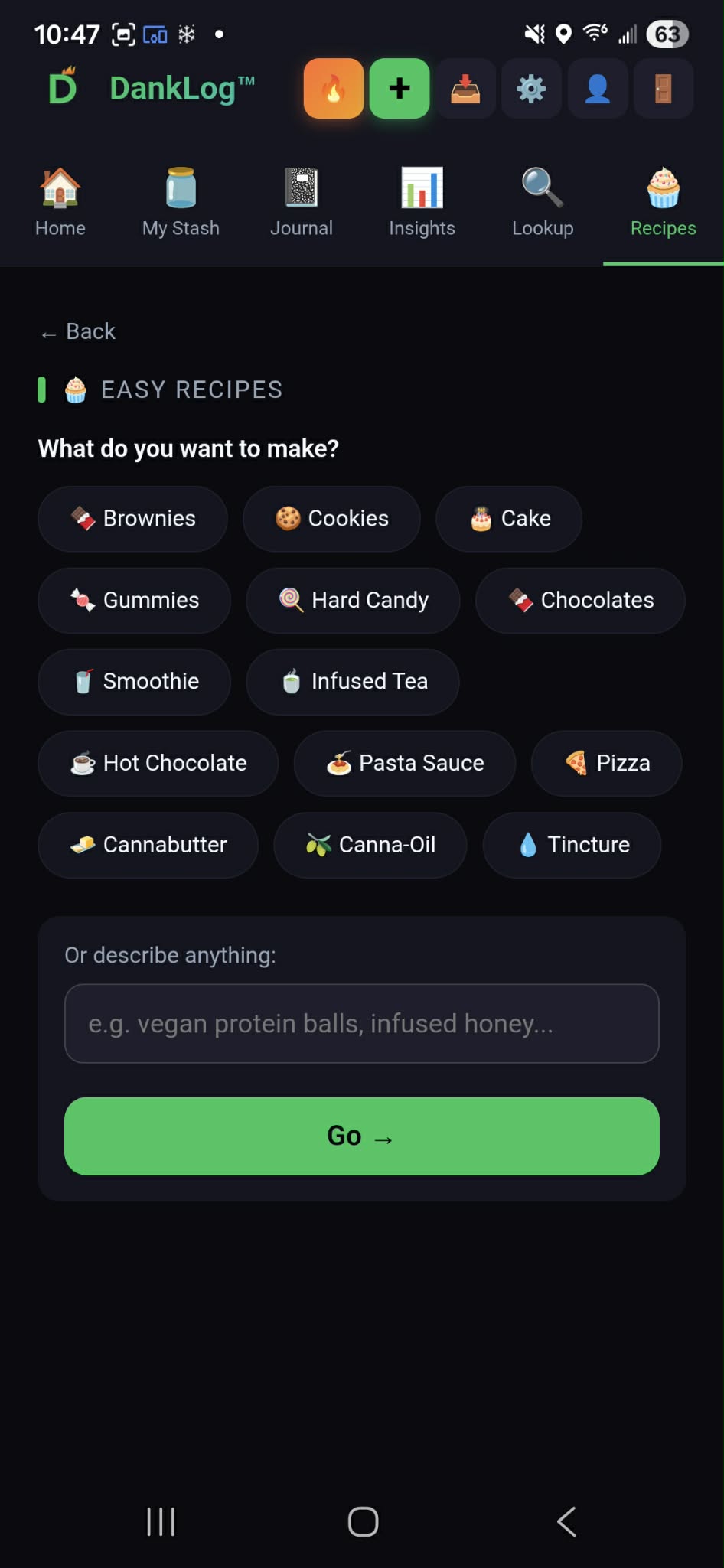
Quick Recipes with Cannabutter
Cannabis Toast: Spread 1 tablespoon on warm toast. Simple, effective, doses in about 45-60 minutes.
Infused Pasta: Toss cooked pasta with 2 tablespoons of cannabutter, garlic, parmesan, and red pepper flakes.
Edible Coffee: Blend 1 tablespoon into hot coffee with a splash of cream. The fat helps it emulsify.
Simple Brownies: Substitute cannabutter 1:1 for regular butter in any boxed or from-scratch brownie recipe. Cut into equal portions and calculate dose per piece using the tablespoon math above.
Cannabutter is the most versatile tool in cannabis cooking. Once you have a batch dialed in with proper dosing, the possibilities are endless. Track which strains make the best butter for you and save your favorite recipes in the Recipe Wizard for next time.
Frequently Asked Questions
How much cannabutter does 1 ounce of flower make?
One ounce (28g) of flower infused into 2 cups of butter yields approximately 2 cups of cannabutter. The flower itself does not add significant volume to the final product. You get roughly the same amount of butter you started with, minus a small amount absorbed by the plant material.
What is the best cannabutter ratio?
A standard ratio is 1 cup (2 sticks) of butter per 7-14 grams of flower. Use 7g for a mild batch (approximately 46mg per tablespoon) or 14g for a strong batch (approximately 92mg per tablespoon). Adjust based on your tolerance and the THC percentage of your flower.
What temperature should I decarb at?
240 degrees F (115 degrees C) for 40 minutes is the standard. This converts approximately 88% of THCA to active THC. Going higher risks degrading THC; going lower means less conversion and potentially weaker butter.
How long does cannabutter last?
Refrigerated in an airtight container, cannabutter lasts 2-3 weeks. Frozen, it lasts 6 or more months. Always label with strain, date, and estimated potency.
Can I use cannabutter in any recipe?
Yes. Substitute cannabutter 1:1 for regular butter in any recipe. The only caution is to keep cooking temperatures below 340 degrees F when possible, as sustained high heat can degrade THC and reduce potency.
Why does my cannabutter taste bad?
Grassy or bitter taste comes from too much plant material in the finished butter. Avoid grinding flower to powder, do not squeeze cheesecloth too hard, and always infuse with water (it absorbs chlorophyll and other unwanted water-soluble compounds). Straining through a coffee filter after cheesecloth gives even cleaner results.
How much cannabutter per dose?
A standard edible dose is 5-10mg of THC. If your cannabutter is made with the standard ratio of 7g of 20% THC flower per cup, each tablespoon contains roughly 46mg THC. For a 10mg dose, you would use about 1/4 tablespoon (roughly 1 teaspoon). Use the potency reference table above to calculate based on your specific batch, or let the DankLog Recipe Wizard handle the math automatically.
What is the best weed to butter ratio?
The best ratio depends on your desired potency. For moderate-strength cannabutter, use 7 grams (1/4 oz) per cup of butter, yielding about 46mg THC per tablespoon. For stronger butter, use 14 grams (1/2 oz) per cup for roughly 92mg per tablespoon. Beginners should start with the lower ratio and adjust upward after testing.
What is the best butter for cannabutter?
Unsalted butter is the standard choice. Higher-fat European-style butters (like Kerrygold or Plugra) with 82-86% butterfat can extract slightly more THC than standard American butter at 80% fat. The difference is marginal, but European butter also produces a richer flavor. Avoid salted butter, as the salt concentration increases when water evaporates during infusion.