Your bong shouldn’t contribute its own tasting notes - especially if those notes are “yesterday’s ashtray.” Knowing how to clean a bong, and how often to do it, helps keep stale odors, sticky resin, and stubborn buildup from taking over your glass. The good news is that most plain glass bongs don’t need an elaborate cleaning kit: a few basic supplies, careful handling, and a repeatable routine usually do the job. Whether you’re dealing with a lightly used beaker or a percolator that’s starting to resemble a science project, here’s how to clean it without turning a simple chore into a broken-glass incident.
How do you clean a bong, and how often should you clean it?
To clean a plain, uncoated glass bong, empty it, remove the bowl and downstem, and use isopropyl alcohol with coarse salt to loosen resin before rinsing thoroughly and letting everything dry. Replace the water after every session, and give a regularly used bong a full cleaning roughly every few days to once a week - or sooner when residue, stale smells, or restricted airflow appear. Always follow the manufacturer’s instructions, especially for silicone, acrylic, decorated glass, or pieces with specialty components.
Think of that schedule as a starting point, not a universal deadline. A small bong used several times daily will need attention sooner than a larger piece used occasionally. Intricate percolators also create more places for residue to collect.
| Cleaning task | Practical starting schedule | Clean sooner when… |
|---|---|---|
| Empty and replace water | After every session | Water becomes cloudy or contains ash |
| Rinse the chamber | After each use, if practical | Loose debris remains inside |
| Clean the bowl and downstem | Every few uses | Residue narrows openings or affects the draw |
| Deep-clean the whole bong | Every few days to weekly with regular use | Glass feels coated, smells stale, or draws differently |
| Dry before storage | Whenever putting it away | The piece will sit unused |
Fresh water isn’t a substitute for removing resin. It refreshes the chamber, but it won’t dissolve the sticky layer clinging to the walls.
Likewise, appearance isn’t the only clue. A bong can look reasonably clear while its bowl or downstem is already overdue for attention. Check those smaller parts instead of judging everything through the main chamber.
Match your cleaning supplies to the material
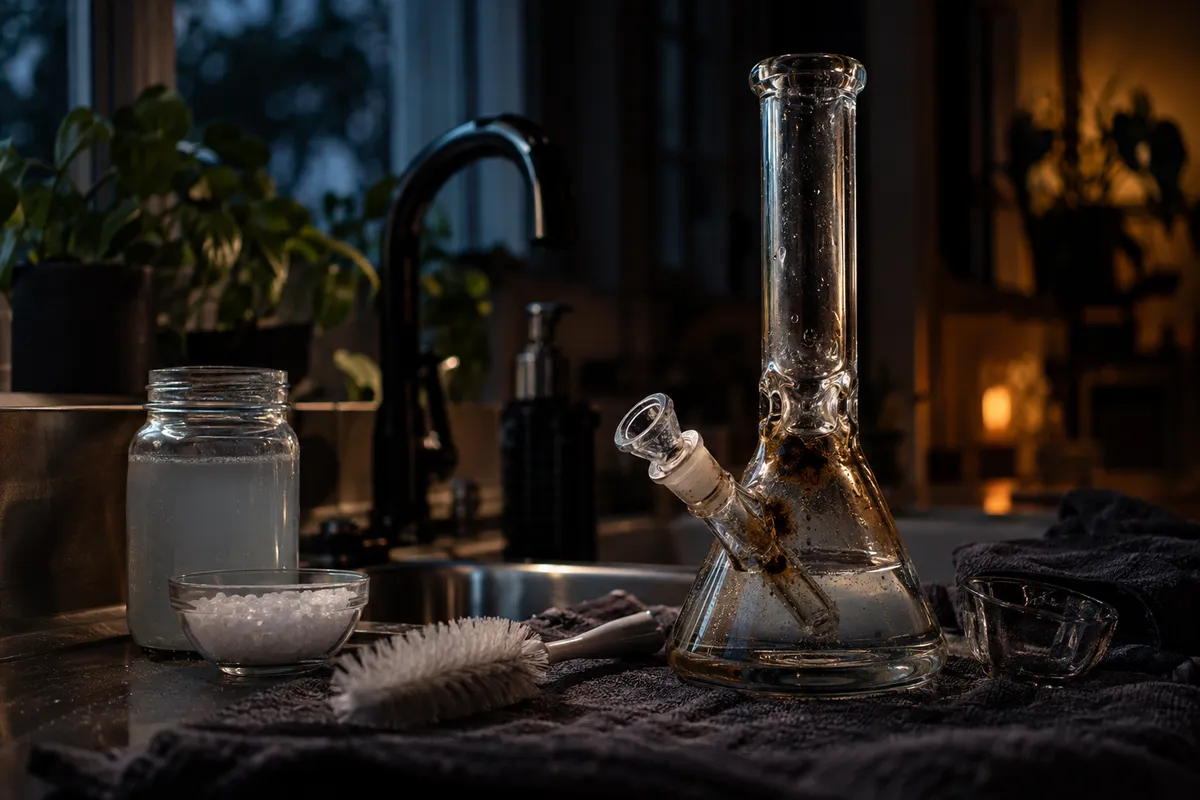
For a plain glass bong, a basic cleaning setup includes:
- Isopropyl alcohol, commonly sold in 70% or 91% concentrations
- Coarse salt, such as kosher salt
- A small container or suitable resealable bag for removable glass parts
- Soft brushes or pipe cleaners designed for glass accessories
- A towel or nonslip mat
- Gloves, if recommended by the cleaner’s label
Alcohol helps dissolve resin; salt provides gentle mechanical scrubbing as it moves through the piece. Higher-concentration alcohol often tackles resin more efficiently, though either concentration may require additional soaking or another cleaning pass.
Keep isopropyl alcohol away from flames, sparks, hot surfaces, and lit smoking materials. Work in a well-ventilated area, keep containers closed when not in use, and never heat alcohol or put it in a microwave. Don’t mix cleaners.
Material matters just as much as the cleaning solution:
| Bong material | Sensible cleaning approach |
|---|---|
| Plain, uncoated glass | Alcohol and salt are commonly used; check maker guidance |
| Silicone | Use the manufacturer’s approved method, often mild soap and water |
| Acrylic or plastic | Avoid alcohol unless explicitly approved; it can damage some plastics |
| Painted, coated, or decorated pieces | Confirm compatibility before soaking or scrubbing |
| Mixed-material pieces | Remove compatible parts and clean each material separately |
Don’t assume “dishwasher-safe” unless the manufacturer says so. Heat, detergent, and movement can damage finishes or delicate parts.
If you’re choosing a future piece, cleaning access deserves a place beside appearance and price. Our first bong buying guide explains percolators, joint sizes, and other details that affect everyday ownership - including how easily you can reach the messy bits.
Clean a glass bong step by step
Set up over a towel or nonslip mat, with enough space that glass parts won’t knock into one another. Handle the piece when you’re clear-headed; slippery glass rewards patience, not improvisation.
1. Empty and disassemble
Pour out the old water and remove the bowl, downstem, and any removable accessories. Clear loose ash and plant material into the trash once completely cool.
If a glass joint is stuck, don’t twist aggressively or use the downstem as a handle. A broken joint turns a cleaning job into a replacement purchase.
2. Give it a lukewarm rinse
Rinse the chamber and removable parts with lukewarm water to flush out loose debris. Avoid boiling water and sudden temperature changes, which can crack glass.
Drain thoroughly afterward so leftover water doesn’t unnecessarily dilute your cleaner.
3. Clean the removable parts separately
Place the bowl and downstem in separate suitable containers or bags with enough alcohol to contact the residue. Add a little coarse salt where it can move through wider passages.
Let them soak for about 15–30 minutes as a starting point, then use an appropriately sized soft brush if needed. Don’t shake multiple glass parts together.
4. Add alcohol and salt to the chamber
Add enough alcohol to wet the dirty interior surfaces, followed by a small spoonful or two of coarse salt. You don’t need to fill the whole bong.
Cover openings with compatible cleaning plugs, hold the piece securely, and gently swirl or shake. Avoid vigorous movements, especially with delicate internal percolators.
5. Rinse and dry completely
Collect the spent cleaning solution and dispose of it according to the product label and local waste rules; don’t assume solvent waste belongs down a household drain.
Rinse every chamber and removable part repeatedly with clean water until no salt, loosened residue, or cleaner remains. Let everything air-dry fully before reassembling and adding fresh water. If a cleaner odor remains, rinse again and allow more drying time.
Tackle stubborn resin without damaging your piece
If the first pass leaves brown patches behind, give the cleaner more contact time rather than shaking harder. Resin buildup often responds better to a second soak with fresh solution than to an increasingly enthusiastic arm workout.
For plain glass, try these adjustments:
- Replace exhausted solution. Dark, residue-heavy alcohol may be less effective than a fresh batch.
- Change the angle. Rotate the piece slowly so the cleaner reaches each dirty surface.
- Brush accessible spots gently. Focus on bowl interiors, downstem openings, and reachable joints.
- Repeat the rinse. Loosened flakes can remain trapped in chambers even after the walls look clean.
Percolators require particular restraint. Don’t jam tools through narrow slits, and don’t force a brush around a bend it wasn’t designed to navigate. If the cleaning method can’t reach a chamber, consult the maker rather than escalating to improvised metal tools.
Also distinguish resin from mineral deposits. Sticky brown or black residue is different from a pale, chalky waterline. If the manufacturer permits it, a separate white-vinegar soak may help loosen mineral deposits on plain glass. Fully rinse away the previous cleaner first, never mix solutions, and rinse thoroughly afterward.
Skip abrasive household powders, sharp scraping tools, and boiling-water shortcuts. They can scratch surfaces, damage finishes, or stress the glass.
Finally, cleaning isn’t a repair method. If you find cracks, chips around the mouthpiece, or damaged joints, stop using the piece. No amount of sparkling glass makes a sharp edge less sharp.
Build a routine that keeps cleaning manageable
The easiest bong to clean is the one that never gets spectacularly dirty. A two-minute reset after a session usually beats negotiating with a month’s worth of resin on a Sunday afternoon.
Start with three small habits:
- Empty the water after use. Don’t leave the chamber full between sessions.
- Remove loose debris promptly. Once the bowl is cool, clear it before residue accumulates.
- Store the piece empty and dry. Give removable parts space to dry rather than sealing moisture inside.
Keep cleaning supplies together, away from heat and out of reach of children and pets. Having a brush, salt, and the appropriate cleaner ready removes the familiar “I’ll do it when I buy supplies” loophole.
Your schedule should reflect actual use. If you use the bong daily, pick a recurring cleaning day and check the bowl between deep cleans. If you use it occasionally, clean and dry it before storage instead of letting old residue sit until next time.
Cleaning can also help you compare sessions more consistently. If the same flower suddenly tastes different, note whether the water was fresh and the bowl was clean before blaming the strain. For other possible contributors, see our guide to why your weed tastes harsh and how to fix it. Clean glass doesn’t make smoke harmless, but it removes stale residue as one variable in the experience.
The takeaway is simple: replace water after each session, clean regularly used glass every few days to weekly, and adjust when buildup tells you to. Use a material-compatible cleaner, handle glass gently, and finish with thorough rinsing and complete drying. DankLog’s session logging feature gives you a place to record your method and add notes such as “freshly cleaned glass,” making comparisons less dependent on memory. It doesn’t need to become a laboratory notebook - just a useful record of what you used and what you noticed. Your bong can stay a piece of glass, not an archaeological record.