Buying a first bong means wading through jargon that sounds like plumbing school: percolators, diffused downstems, 14mm joints, borosilicate. Here is what each term actually means for the hit you take, and what a first piece should really cost.
Size: bigger is not smoother
Height mostly buys you chamber volume, which means bigger hits, not better ones. For a first piece, 8 to 12 inches is the sweet spot: enough water path to cool the smoke, small enough to clear comfortably and store on a shelf instead of the floor. The 16-inch showpiece can be the second bong.
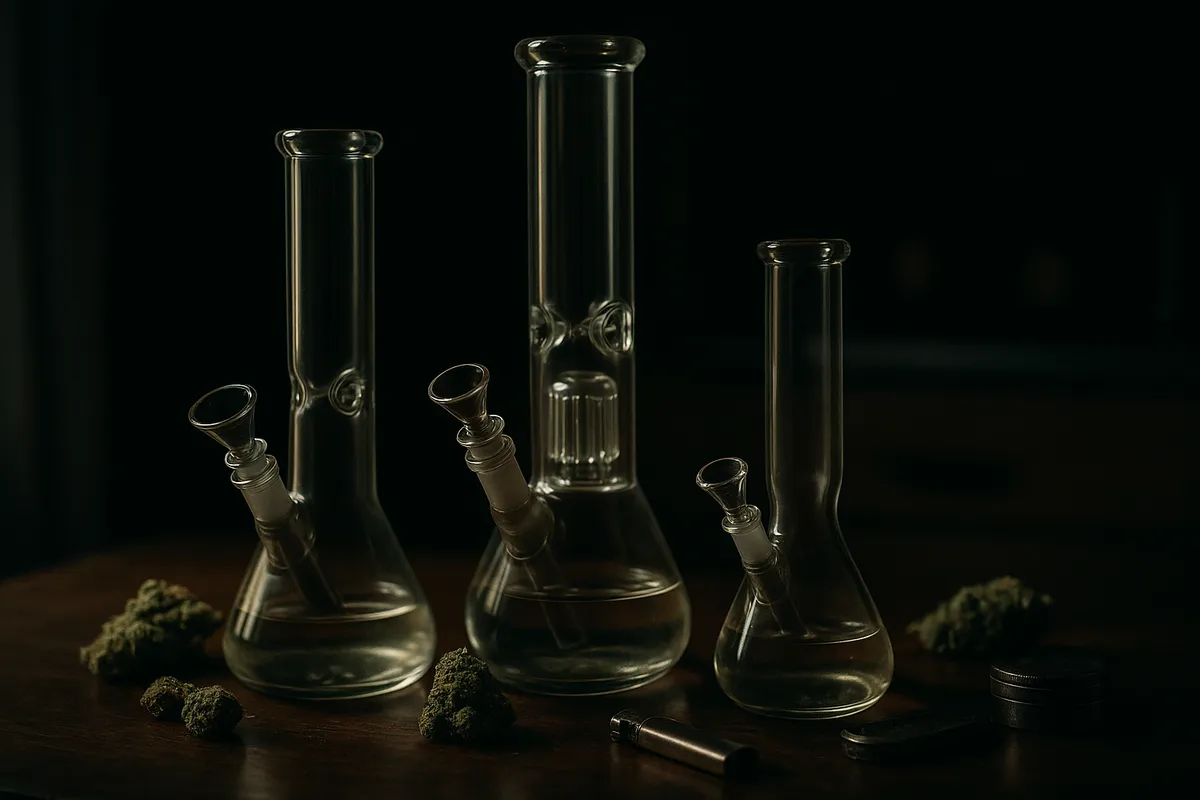
Shape matters more than height. A beaker base holds more water and stands more stable; a straight tube clears faster and is easier to clean. Either is a fine first choice; wobble-prone novelty shapes are not.
Percolators in plain English
A percolator is anything that breaks smoke into smaller bubbles so more of it touches water. More bubbles, more cooling, smoother hit. The catalog names you will see:
- Diffused downstem: the simple slotted tube the bowl sits in. Honestly, this is 80 percent of the benefit and it costs almost nothing.
- Showerhead: a dome with slits around the rim. Noticeably smoother, easy to clean. The best single upgrade.
- Honeycomb: a flat disc full of tiny holes. Great diffusion, but the holes clog if you are lazy about cleaning.
- Tree: multiple glass arms, each a mini-diffuser. Smooth, fragile, and the hardest to clean.
- Recycler: loops the water in a cycle for maximum cooling. Beautiful, functional, priced accordingly.
The honest advice: a beaker with a diffused downstem, or one showerhead perc, is the right amount of engineering for a first piece. Every extra perc adds drag (harder pull) and cleaning time.
Joints and bowls: the part everyone gets wrong
The joint is the ground-glass socket the bowl slides into, and it comes in two sizes that are not interchangeable: 14mm and 18mm. Check the size before you buy any replacement bowl, ash catcher, or adapter. 14mm is the more common size on mid-size glass, and replacement bowls are everywhere and cheap. This one detail saves you a wrong-part order later.
Glass thickness: where cheap bongs cheat
Thickness is measured in millimeters and it is where budget pieces cut corners. 3mm walls are fine with careful handling; 5mm or more survives real life. Weight is your showroom test: a piece that feels light for its size is thin somewhere you cannot see, usually the base, which is exactly where bongs die.
What a first bong actually costs
DankShop’s bongs and water pipes section carries 700+ pieces in stock right now, from brands like GRAV, Hemper, and MJ Arsenal, and the price bands break down honestly:
- Under $50 (about 300 pieces): simple beakers and straight tubes with diffused downstems. Everything a first bong needs, nothing it does not.
- $50 to $150 (the biggest band): thicker glass, showerhead and honeycomb percs, brand-name quality. Where most people should land for a piece that lasts years.
- $150 and up: recyclers, multi-perc towers, heirloom thickness. Wonderful, and worth it the second time around.
The quick decision table
| You want | Buy |
|---|---|
| Cheapest real bong, no regrets | Beaker with diffused downstem, under $50 |
| Smoothest hit per dollar | Showerhead perc, $50 to $150 |
| Something that survives roommates | 5mm+ glass, wide base |
| Easy cleaning forever | Straight tube, minimal percs |
Round out the first order
Two boring add-ons make the whole thing work: a spare bowl in your joint size, and proper cleaning supplies, because resin buildup is what actually ruins a bong’s hit long before the glass fails. Both live in the same catalog, flat $8 US shipping. DankLog members get 5 to 10 percent off in the app.