Decarboxylation, or “decarb” for short, is an essential process for unlocking the full potential of cannabis. While most people are familiar with decarbing flower, kief and hash are lesser-known but potent forms of cannabis that have their own unique decarb needs. Whether you’re looking to enhance your edibles or elevate your smoking experience, understanding the decarb temperature for kief and hash is crucial.
What Is the Ideal Decarb Temperature for Kief and Hash?
Kief and hash do not need a lower decarb temperature than flower. Decarboxylation depends on temperature and time, not on how concentrated the material is. What changes is heat transfer: with no leaf in the way, kief and hash can be checked earlier than flower at the same 240°F (115°C) baseline from our decarb temperature chart. Wang et al. 2016 also found THCA takes about 30 minutes to convert fully even at 230°F (110°C), so the best move is steady heat, careful checking, and enough time.
Why Decarboxylate Kief and Hash?
Before we dive into the specifics of temperature and techniques, let’s clarify why you should decarb kief and hash in the first place. Decarbing activates the cannabinoids, specifically converting THCA into THC, which is what gives you that euphoric high.
Both kief and hash are rich in trichomes, the resinous glands where cannabinoids and terpenes reside, making them potent and flavorful. By decarbing these forms of cannabis, you unlock their full effects, especially if you plan to use them in edibles or other infused products.
Key Differences Between Decarbing Flower, Kief, and Hash
When it comes to decarbing, the form of cannabis you’re using can affect your approach. Here’s a simple comparison table:
| Cannabis Type | Ideal Decarb Temperature | Time Required |
|---|---|---|
| Flower | 240°F (115°C) | About 40 minutes |
| Kief | 240°F (115°C) | Start checking at 30 minutes |
| Hash | 240°F (115°C) | Break into small pieces, start checking at 30 minutes |
Techniques for Decarbing Kief and Hash
Now that you know the temperatures, let’s explore some effective techniques to decarb kief and hash.
1. Oven Decarbing
The most straightforward method is using your conventional oven:
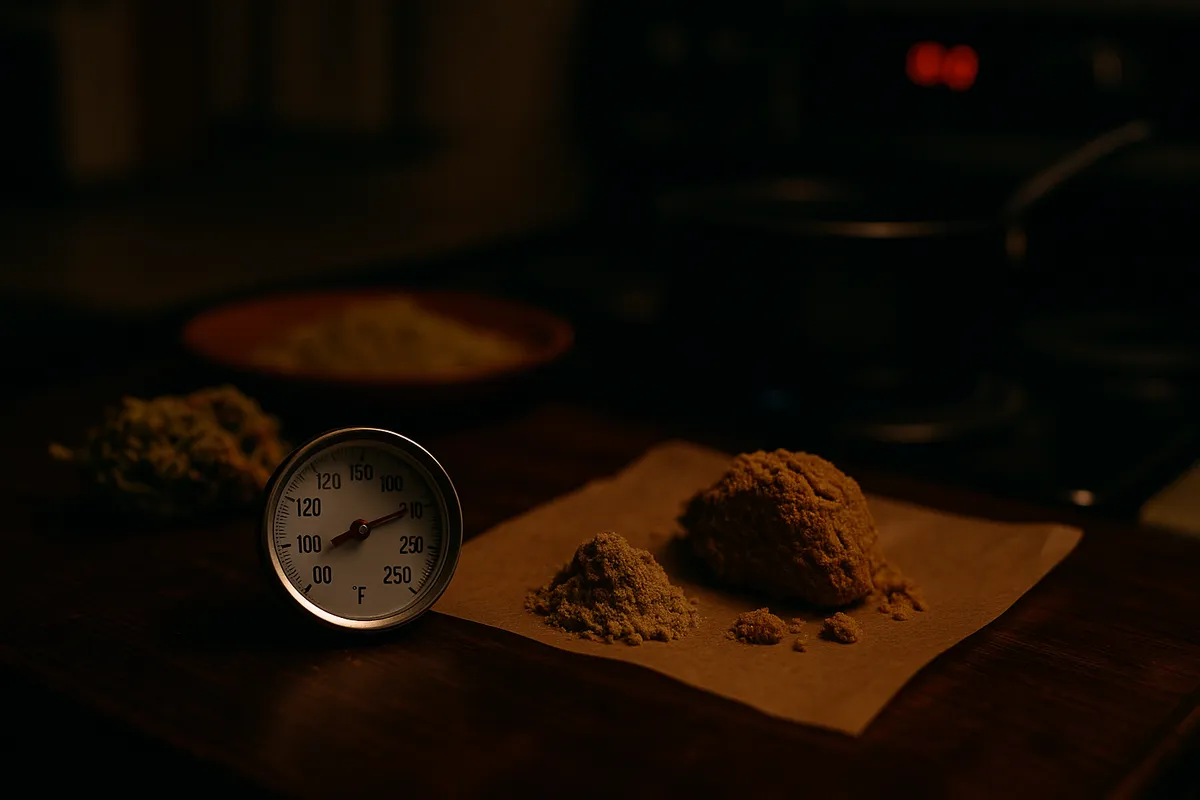
- Preparation: Preheat your oven to 240°F (115°C). Spread your kief or hash on a parchment-lined baking sheet.
- Time It Right: Place it in the oven and start checking from 30 minutes. Use the decarb calculator if your oven runs at a different temperature.
- Cool Down: Once the time is up, remove it from the oven and let it cool before using it in your preferred recipes.
2. Sous Vide Method
If you’re looking for precision, consider using the sous vide method:
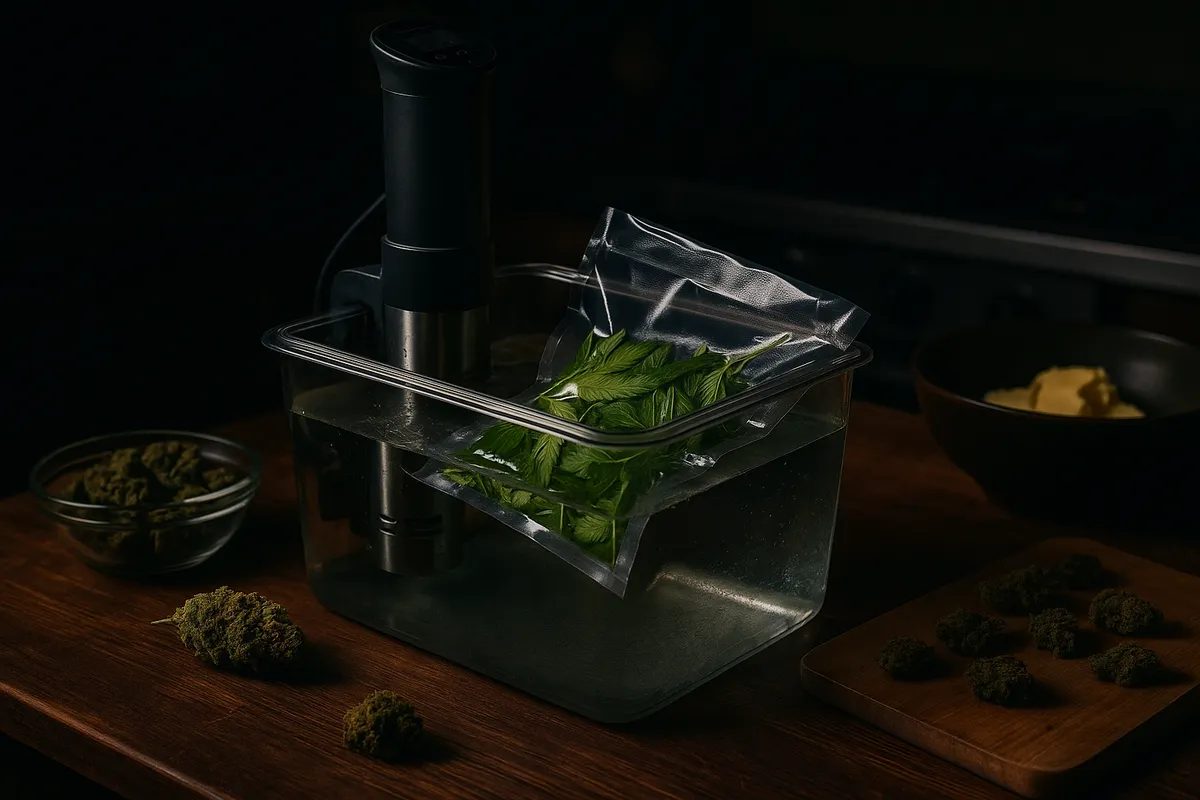
- Setup: Place your kief or hash in a vacuum-sealed bag. Fill a large pot with water and heat it to about 200°F (93°C); water cannot go above 212°F (100°C) without pressure.
- Decarb Time: Submerge the bag for about 90 minutes, allowing the gentle heat to activate the cannabinoids without risk of burning.
- Dry Off: After the time is up, remove the bag, and pat it dry before using.
The sous vide method allows for precise temperature control, ensuring you get the maximum potency without losing any terpenes.
3. Stovetop Method
For a quick and easy option, you can also decarb on the stovetop:
- Heat It Up: Use a double boiler or a small saucepan with a little water in the bottom to create a gentle heat.
- Timing: Add your kief or hash to the top portion and use the same roughly 90-minute water-bath window, stirring occasionally to ensure even heating.
- Watch Closely: This method can be trickier, so keep a close eye on your product to avoid scorching.
What to Do After Decarbing Kief and Hash
Once you’ve successfully decarbed your kief or hash, the next step is to decide how you want to use it. You can mix it into your favorite recipes, sprinkle it on top of a bowl, or even roll it into a joint. If you’re interested in making edibles, check out our edible recipes feature for some delicious options that can elevate your experience.
Store Your Decarbed Kief and Hash Properly
After decarbing, it’s essential to store your kief and hash correctly to maintain its potency. Airtight containers in a cool, dark place are ideal for keeping your stash fresh. You can even track your storage habits with the strain tracking feature in DankLog to ensure you know your stash history.
Conclusion
Decarbing kief and hash might seem daunting at first, but with the right approach, you can unlock their full potential and take your cannabis experience to the next level. Remember, the key is to use steady heat, start checking a little earlier than flower, and be patient with the process.
As you embark on your cannabis journey, consider leveraging features from DankLog to track your consumption, log your sessions, and discover new strains that suit your vibe. Whether you’re making edibles or just enjoying some potent hash, the right tools can make all the difference in your cannabis adventure. Happy decarbing!