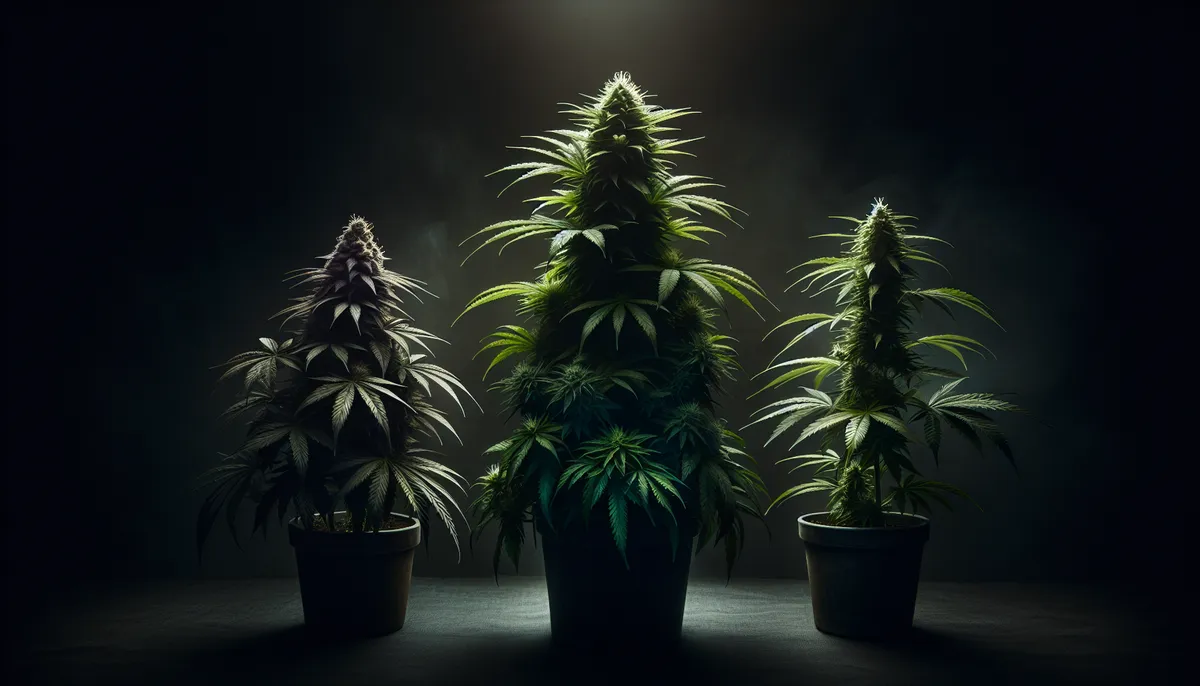
A cannabis strain’s family tree can look like a secret menu: a little Kush here, a little Haze there, and suddenly you’re staring at a name that sounds like a discontinued breakfast cereal. Behind those names, though, parent strains can offer useful clues about a cultivar’s breeding history, possible aromas, and relationships to other strains you’ve enjoyed - provided you treat those clues as starting points rather than promises printed in genetic ink. Learning to read cannabis lineage means knowing what a cross actually tells you, what it leaves out, and how to connect that family history with the specific flower in front of you.
What do parent strains tell you about a cannabis strain’s lineage?
Parent strains identify the plants or breeding lines used to create a cannabis cross, revealing its immediate genetic ancestry. They can suggest possible inherited traits, including aroma, growth characteristics, and cannabinoid potential, but they cannot reliably predict the exact composition or experience of every plant sold under that strain name.
Think of lineage as a family tree, not a product review. If a breeder crosses Strain A with Strain B, their offspring receive genetic material from both parents. That does not mean the resulting flower will smell halfway between the two or deliver a perfectly averaged experience.
Blue Dream, for example, is commonly described as a Blueberry × Haze cross. That background offers a useful explanation for why berry and Haze-like aromatic descriptions often appear around the name. It does not establish that every Blue Dream batch will have the same terpene profile, THC content, or character.
Here’s the practical distinction:
| Lineage detail | What it can tell you | What it cannot guarantee |
|---|---|---|
| Named parents | The reported immediate cross | Independently verified ancestry |
| Repeated ancestors | A recurring breeding influence | Identical traits across descendants |
| A selected parent cut | Which particular plant contributed genetics | Uniform offspring from seed |
| A famous strain family | A useful direction for exploration | A predictable personal response |
| Breeder records | More context about a cross’s origin | The quality of every retail batch |
The key word is reported. Some pedigrees have clear breeder documentation; others rely on stories repeated across menus and strain databases. Knowing that difference makes you a more informed shopper.
Genetics create possibilities, not carbon copies
Cannabis breeding involves selecting among variations, not simply mixing two finished products. In an ordinary sexual cross, offspring receive roughly half their nuclear genetic material from each parent, but inherited traits do not necessarily appear in tidy 50/50 proportions.
Many characteristics involve multiple genes and interactions among them. Some traits may be prominent, others subtle, and siblings from the same cross can look and smell noticeably different.
That’s why breeders grow multiple seeds and select individual plants. You may hear growers call these selections phenotypes, although the term technically describes an organism’s observable characteristics rather than a special category of plant.
Three terms help make sense of the process:
- Genotype: A plant’s genetic makeup.
- Phenotype: Its observable traits, shaped by genetics and growing conditions.
- Cultivar: A cultivated variety maintained or selected for particular characteristics; in everyday cannabis conversations, people usually say “strain.”
A breeder might find one plant with a pronounced citrus aroma and another with earthier notes in the same seed population. Both can share the same parent strains.
Clones add another layer. A cutting preserves the source plant’s genotype much more closely than producing a new plant from seed. Even then, cultivation, harvest timing, drying, curing, and storage can influence the finished flower.
For shopping purposes, the lesson is simple: matching parent names is weaker evidence than matching a known selection, producer, and current batch profile. A family resemblance is useful, but it is not a fingerprint.
Breeding shorthand reveals the family structure
Once you understand the basics, cannabis genetics notation becomes less intimidating. Those letters and numbers describe breeding relationships - not a secret ranking system for how impressive the flower will be.
Crosses, generations, and backcrosses
A label such as A × B identifies a reported cross between two parents. Breeders often list the seed parent first and pollen parent second, but retail listings do not always preserve that convention consistently.
Other common terms include:
- F1: The first filial generation from a particular parental cross. The label alone does not prove that the parents were genetically uniform or that all offspring will be consistent.
- F2: A second filial generation, typically produced by crossing members of the F1 generation. This can reveal a wider range of trait combinations.
- BX or backcross: Offspring crossed back to a parent or a genetically similar representative of that parent, often to reinforce selected characteristics.
- S1: A first generation produced through self-pollination, generally using pollen induced on a female plant. These seeds can still show variation.
You might also encounter a pedigree written as (A × B) × C. That means an A-and-B cross was subsequently crossed with C; it does not establish exact percentages for aroma, appearance, or subjective effects.
Backcross numbers deserve similar caution. BX1 and BX2 describe breeding steps, but higher numbers are not automatic quality grades.
When comparing two products, ask which breeder created the line and whether the seller can identify the selection. “Same parents” may describe related projects, not the same finished cultivar.
Aroma and batch data sharpen lineage clues
Lineage becomes most useful when you pair it with information about the actual product. An ancestor associated with citrus aromas might give you a reason to investigate a descendant, but the current batch’s aroma and laboratory results offer more direct evidence.
Start with the distinction between family reputation and measured composition.
A strain family may be described as gassy, fruity, earthy, or floral. Those descriptions can help organize your search, but aroma comes from a complex mixture of compounds - not a single terpene acting alone. Likewise, the presence of one terpene does not establish how a product will make you feel.
A certificate of analysis, when available and matched to the batch, may report cannabinoids and sometimes terpenes. Check the batch identifier and testing date rather than assuming an old online listing describes today’s jar. Testing also has limits: results describe the submitted sample, and not every laboratory measures the same compounds.
Consider two flowers sold as the same cross:
- Batch A: Berry-forward aroma, lower labeled THC, and a recently packaged date.
- Batch B: Earthier aroma, higher labeled THC, and several months in storage.
Shared lineage does not erase those differences. Nor does the higher THC number automatically make Batch B the better match for your preferences.
With DankLog’s strain tracking, you can keep strain names, THC/CBD information, terpene notes, and favorites together. Recording the producer and batch in your notes helps prevent a broad strain name from swallowing the details that made one purchase memorable.
Personal records make ancestry useful
The practical way to use cannabis lineage is to turn it into a hypothesis: “I’ve enjoyed several strains with this ancestor, so another descendant might be worth comparing.” That is much stronger than deciding that every member of a family must suit you.
A simple comparison process keeps the family tree in perspective:
- Start with a familiar reference. Choose a product you have already tried and describe what you liked or disliked in plain language.
- Record its reported ancestry. Add the breeder or source when available, and mark uncertain pedigree information as uncertain.
- Choose a related comparison. Look for one shared parent rather than assuming any vaguely similar name means a genetic relationship.
- Capture product details. Note the producer, batch, labeled cannabinoids, aroma, and any available terpene results.
- Record the circumstances. Method, amount, timing, and setting can complicate comparisons, so document them rather than attributing everything to genetics.
- Look for repeated patterns. One enjoyable session is a data point, not a verdict on an entire breeding family.
For example, suppose you enjoy the berry aroma of a Blue Dream batch. Trying another reported Blueberry descendant could help you explore that preference, but it would not isolate Blueberry ancestry as the cause. The other parent, selected plant, cultivation, and storage still matter.
You can use session logging to preserve those details while they’re fresh. Notes such as “bright berry aroma, preferred this producer” are more useful later than “good stuff.” Future you deserves better research materials.
Also record counterexamples. If three related strains appeal to you and a fourth does not, that exception can reveal something important about the limits of pedigree-based shopping.
Ultimately, parent strains tell you where a cannabis cultivar reportedly came from - not exactly what every descendant will be like. Use lineage to narrow your curiosity, batch information to evaluate the product, and personal notes to decide what deserves another look. DankLog brings strain tracking and session history together, while its smart recommendations can help you explore options using personal history and community patterns. The family tree provides context; your records supply the missing detail. That combination is more useful than expecting a famous ancestor to do all the explaining.